For most businesses, food waste is simply part of daily operations. And as you’ll know, the volume produced doesn’t necessarily reflect the size of the organisation.
In reality, it’s the type of activity that drives the waste profile. A large corporate office with hundreds of employees may generate relatively small amounts from staff kitchens and break areas. Meanwhile, a smaller pub or hospitality venue serving food throughout the day can produce substantial volumes through preparation waste, plate returns, and spoilage.
For waste managers, that distinction is key. Headcount alone won’t give you an accurate picture. Understanding how the business operates, what’s prepared on site, how often deliveries are made, service patterns, peak trading times is what allows you to specify the right container sizes, collection frequency, and reporting structure.
From 2027, these regulations require all businesses in England to separate food waste from general waste, regardless of size. Whether you produce a caddy full of food waste every two weeks or multiple bins a day, having a clear food waste storage system in place helps you stay compliant and maintain good hygiene standards.
Effective food waste storage supports better operational efficiency. When set up correctly, waste areas remain clean, organised and easy to manage. Odours are controlled, hygiene standards are maintained, and teams can handle waste confidently without disrupting day-to-day activity.
This guide offers practical steps for businesses handling medium to high volumes of food waste, while still being useful for smaller sites getting ready for upcoming regulations. By setting up your storage correctly from the start, you make compliance and day-to-day management much easier.
Choosing the Right Containers
Start with the correct bins, as the containers you choose set the standard for everything else.
For businesses producing food waste, bins should be:
- Strong and durable
- Leak resistant
- Easy to clean
- Fitted with lids that close securely
A tight lid can avoid odours and keep surrounding areas tidy. They also support good hygiene standards in busy environments.
Larger operations often benefit from multiple internal bins in food preparation areas, which are emptied into external containers throughout the day. Smaller businesses may only need one internal caddy and an appropriately sized external bin, such as a 140L or 240L although other sizes are available to match your specific waste levels and site logistics. Best practice is to match your bin capacity to your waste output so that waste does not sit longer than necessary. Over the years, we have found that reviewing bin capacity with our clients, even once a year, can make a significant difference to collections and storage management. It also prevents bins becoming unnecessarily heavy. Excess weight can increase costs so keeping capacity aligned with actual waste levels supports better cost control.
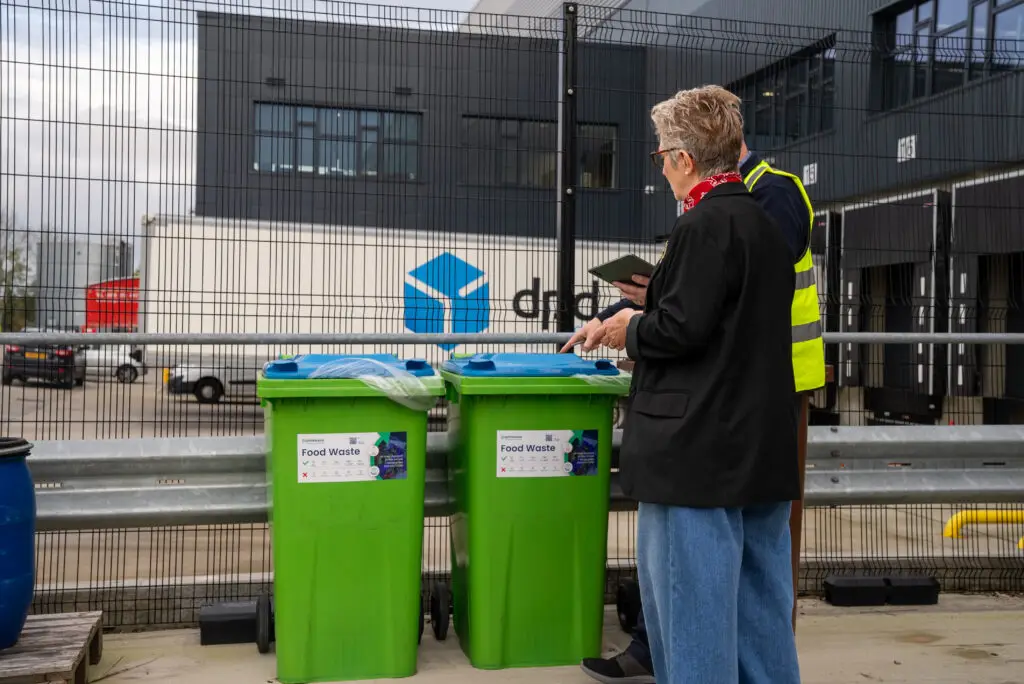
Caddy and Bin Container Placement
Internal caddies or food waste bins should be placed where food waste is created, such as in kitchens, canteens, offices or food production areas. When bins are close to the source, staff are more likely to use them correctly as part of their normal routine. When we look at bin layouts with our clients, even small placement changes can improve separation without adding extra bins. This helps ensure food waste goes into the right container rather than general waste, improving recycling rates and supporting compliance.
External bins should be located in a designated waste yard, bin store or rear access point that is convenient for staff and accessible for collections. Where multiple waste streams are in use, make sure food waste bins are clearly labelled and positioned separately. A simple, organised layout supports hygiene and consistent use. Your waste management company will often supply labelling as standard.
Collection Frequency
Regular collections are mandatory for keeping food waste storage under control and carry out good hygiene practices. Typically, food waste should be collected at least every two weeks. Left in the bin too long, food waste will start to erode the plastic and cause bin deterioration because it breaks down the polymer in the plastics.
For medium and large producers, they often need multiple collections per week. In busy kitchens or production areas, internal bins may be emptied several times a day, either by rotating full bins to the waste yard or by emptying caddies into larger external containers. Collection frequency should reflect your site layout, quantity of bins and waste volumes. Over the years, we have found that aligning collection schedules with actual waste levels keeps food waste under control and storage areas organised
External collections should match the amount of food waste you produce. Waste should not be left sitting once containers are full. Even smaller businesses separating food waste under simpler recycling rules need a collection plan that keeps storage areas clean and manageable.
It is good practice to:
- Review your waste levels periodically
- Adjust collections during peak trading periods
- Work with a licensed waste carrier
- Ensure waste transfer documentation is properly maintained
A collection schedule that matches your real waste output helps prevent build up and keeps your food waste storage system working as intended.
Cleaning and Hygiene
Consistent cleaning is central to good food waste storage.
Internal bins should be lined with compostable bags and emptied regularly, often daily in busy environments. Each time the bin is emptied, it’s best practice to fit a fresh liner to keep things clean and ready for use. External bins also require routine cleaning to prevent residue build up. With Printwaste food waste collections, external bins are jet washed as they are tipped and re lined with a fresh compostable liner at each service, supporting compliant hygiene standards.
Many larger businesses assign responsibility for food waste management to specific team members or include it in daily closing checklists. We regularly support teams in putting simple routines in place that make food waste management feel structured rather than reactive. Smaller sites can follow a simple written routine to ensure standards remain consistent.
Pest Prevention
Well managed food waste storage naturally supports pest prevention.
Well managed bins and clean storage areas help prevent pest problems before they develop. This is particularly important for businesses generating larger volumes of food waste, where external containers are used frequently.
Simple steps include:
- Ensuring bins are not overfilled
- Checking that lids close properly after each use
- Keeping surrounding areas free from loose debris
- Acting promptly if you notice signs of activity
Small, consistent checks help keep your waste area clean and under control.
Staff Training and Clear Procedures
Clear signage and straightforward instructions help staff separate food waste correctly and consistently. Bins should be clearly labelled so there is no confusion about what belongs in the food waste stream. Staff should also understand when and how internal caddies are emptied into external bins as part of their normal routine.
In larger workplaces such as hotels, schools or manufacturing sites, food waste handling can form part of existing hygiene or health and safety training. In smaller businesses, covering food waste procedures during staff induction is often enough to set clear expectations from the start.
Regular reminders help encourage and maintain good separation practices as well as continue strong recycling rates across the site.
Making Food Waste Storage Work for Your Business
Managing food waste across your workplace comes down to getting the basics right and reviewing them regularly. The right bins, sensible placement, clear routines and a collection schedule that reflects your actual waste levels will keep things running smoothly.
As your operations change, whether through growth, seasonal demand or shifts in activity, it is important to check that your container sizes and collection frequency still suit your needs.
Working with organisations across the UK, we see how small adjustments to bin choice, placement or collection timing can make food waste easier to manage and improve separation rates. At Printwaste Recycling and Shredding, we assess your waste output, recommend the right container sizes and quantities, provide rinse and re-line servicing, and set collection schedules that reflect how your workplace operates.
If you would like to review your current food waste arrangements or prepare for upcoming regulatory requirements, speak to our team to discuss a solution that fits your business. Call us on 01242 588600 or email us at info@printwaste.co.uk.

![ESPO Framework Supplier Logo - Black [JPEG]](https://www.printwaste.co.uk/wp-content/uploads/2025/07/ESPO-Framework-Supplier-Logo-Black-JPEG-300x70.webp)