Why Recycling Rates Matter More in 2026
Office recycling has changed. Over the last few years, there’s been a clear shift in how businesses think about waste. Many offices are now far more sustainability-conscious and are working towards environmental standards and wider ESG goals.
Recycling is now seen as a normal part of running a responsible workplace. The focus in 2026 is no longer on whether offices should recycle, but on how recycling systems are set up and how well they work day to day.
In 2026, that shift is being further shaped by Simpler Recycling. It’s changed how offices think about waste on site and moved the focus beyond having one recycling bin and one general waste bin. The focus now is separating materials properly, setting up collections correctly and making sure recycling works the same way across the office.
The rest of this guide looks at the practical steps office managers can take in 2026 to improve recycling rates, focusing on straightforward changes that make recycling simpler for staff and easier to manage across the workplace.
How Workplace Recycling has Changed
Workplace recycling has continued to evolve, and by 2026 many businesses are building on what they already have in place. Recycling at work is now less about a two bin solution (recycling and general waste) and more about creating an easier system that increases recycling.
Today, businesses are expected to:
- Separate recyclable materials correctly to reduce contamination
- Store and securely shred confidential documents and media that are no longer needed
- Demonstrate responsible waste management for other items such as waste electrical
Simpler Recycling is now mandatory for businesses with 10 or more full time employees, with all businesses expected to follow the same approach from 2027. This has changed how organisations need to think about recycling at work. It is no longer about having the right paperwork in place, but more focus on how waste is separated day to day. Where bins are located, how they are labelled, and how staff are supported through clear education can all make a real difference
For those responsible for facilities, waste or compliance, the most effective recycling systems are the ones that are simple, consistent and easy for everyone to follow.
Start with a waste audit
A waste audit is one of the best places to start if you want to improve recycling rates in an office. It shows what’s actually going into each bin day to day, where recyclable material is ending up in general waste, and which parts of the office would benefit from clearer recycling setups.
From the waste audits we carry out across offices, it’s very common to find that up to 60% of what’s in general waste bins could have been recycled. This is something we see regularly when reviewing bin setups and collections on site, and it often highlights where clearer separation or better bin placement could support higher recycling rates.
So, what does waste audit consist:
- Opening or checking general waste bins to see what more could be recycled.
- Reviewing collection data and currently disposal routes for each waste type
- Walk-around assessing bin placement vs. waste generation
- Discuss current levels of understanding and engagement from staff
Detailed audits with recommendations help facilities and waste managers make more informed decisions that they can 1) take action 2) communicate with colleagues and managers. Many businesses choose to involve expert support at this stage to ensure audits are accurate and lead to sustainable improvements.
Choose the right bins to help reduce contamination
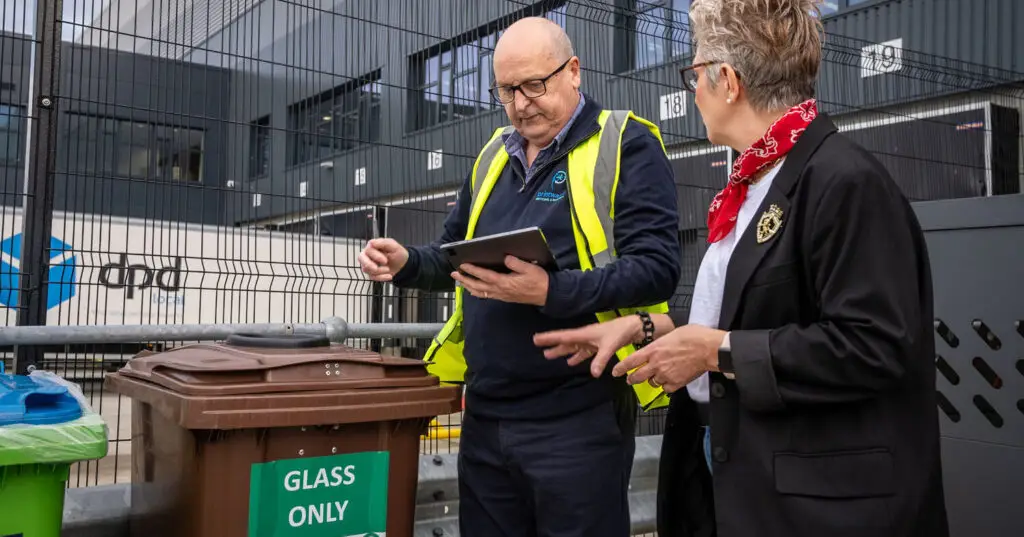
Choosing the right bins, and positioning them in the right places, has a direct impact on recycling rates. When bins are placed inconsistently across an office space, or don’t reflect where and what types of waste are being generated, contamination becomes far more likely. A well-positioned bin area, often using a bin station with the correct bins grouped together, makes recycling easier for staff, helping businesses capture more recyclable material and reduce what ends up in general waste.
What good looks like:
- Bins located where waste is generated, such as kitchens/break rooms, communal areas, offices, and meeting rooms
- Secure lockable consoles for where confidential waste is generated i.e., next to printers, desks and meeting areas
- Clear labelling supported by simple images
- Consistent lid and label colours across the site
- Streamlined bin options using bin stations rather than standalone bins
Contamination is one of the biggest challenges to improving recycling rates. Food waste in dry recycling, liquids left in containers, and items recycled based on guesswork can all prevent material from being recycled and result in it being sent to general waste instead.
Reducing contamination often comes down to a few straightforward steps: clearer signage, simple staff guidance, removing unnecessary or confusing bins, placing them in the correct areas and carrying out regular checks.
Follow the Waste Hierarchy
Once waste is produced in an office, the next question is how it should be managed. The waste hierarchy provides a clear framework for making those decisions and is widely used within the waste management industry to determine the most appropriate recycling, recovery, or disposal routes for different waste streams.
The waste hierarchy ranks waste management options in order of environmental impact:
- Reduce
- Reuse
- Recycle
- Recovery
- Disposal
In practice, waste management providers use the waste hierarchy to design office recycling systems that capture more recyclable material and reduce the amount sent to general waste and disposal. While best practice principles are broadly the same, how they are applied will vary from office to office. Factors such as layout, staffing levels, waste types, and day-to-day activities all influence what will work best in practice. Planning recycling systems around how a workplace actually operates, often with expert support, helps ensure waste management is sustainable, compliant, and easier to manage in the long term.
Simple recycling tips for everyday workplaces
Small changes can make a noticeable difference. Useful everyday tips include:
- Empty liquids and leftover food soilage to prevent cross-contamination
- Squash bottles before recycling containers helps maximise bin capacity
- Make sure bins are visible and recycle rules are communicated
- Review signage regularly and update it when needed
- Encourage staff to ask questions if they are unsure
How do I educate my staff to recycle better?
Helping staff recycle correctly is mostly about making things clear and easy. In busy offices, people don’t have time to stop and read long instructions, so recycling systems need to make sense at a glance.
Clear labels on bins, recycling awareness workshops, consistent layouts across the office, and simple reminders all help staff feel more confident about what goes where. When recycling is set up this way, people are far more likely to get it right without needing to be told repeatedly.
Keeping an eye on recycling and contamination levels, can also help spot where extra support might be useful, whether that’s updating signage, refreshing educational guidance, or answering common questions as they come up.
Improving workplace recycling in 2026
Improving workplace recycling rates in 2026 is about designing a waste strategy that works for your business’ environment. Waste audits, improving bin placement and reducing contamination all help towards this by increasing the amount of material that is recycled correctly.
If you would like support reviewing your current setup, Printwaste Recycling & If you would like support reviewing your current recycling setup, Printwaste Recycling & Shredding can help.
Get in touch with our team to arrange a waste audit and discover how your workplace recycling rates could be improved. Call us on 01242 588600 or email us at info@printwaste.co.uk.
![ESPO Framework Supplier Logo - Black [JPEG]](https://www.printwaste.co.uk/wp-content/uploads/2025/07/ESPO-Framework-Supplier-Logo-Black-JPEG-300x70.webp)