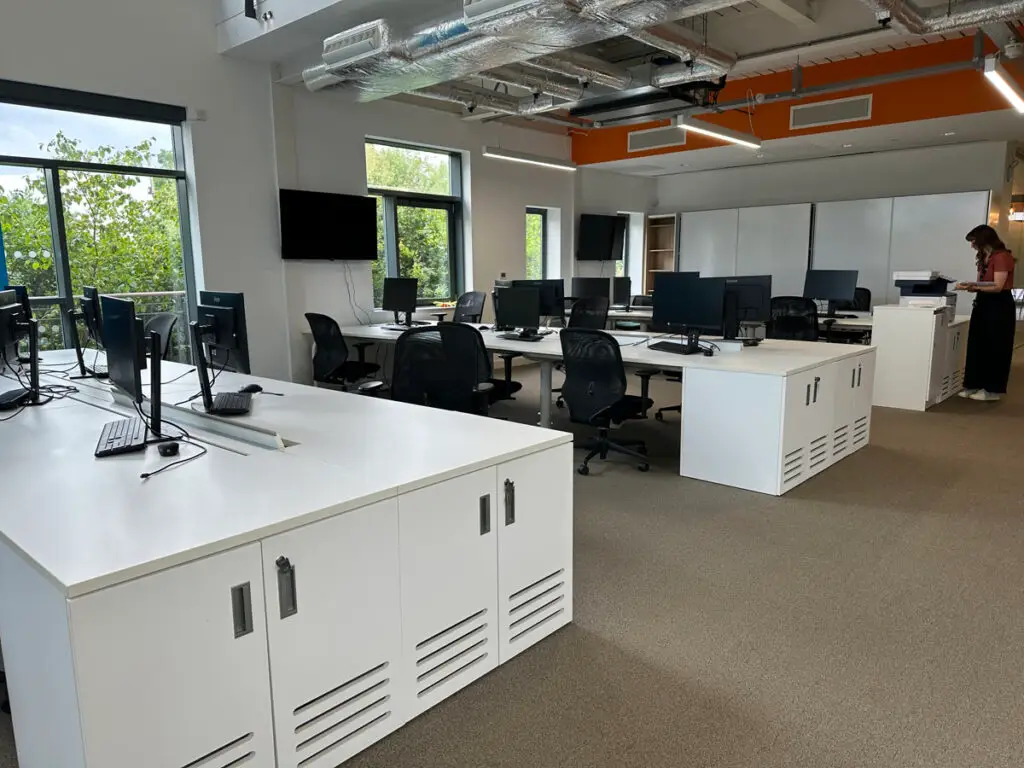
Why Office Clearance Need More Thought Than Expected
Office clearances often happen when a business is going through change. This usually happens during a busy period such as a move, refurbishment, downsizing or a closure. For many businesses, it’s also not something they do often so it is easy to underestimate what’s involved.
Office clearances usually involve more than removing unwanted items.
Sensitive paperwork and IT equipment must be dealt with securely, and different materials need to be separated and disposed of correctly. They also need to consider building access, loading arrangements and other offices.
If this isn’t handled properly, it can lead to GDPR breaches, fly-tipping liability as well as delays or unexpected costs that can interrupt busy schedules.
With proper planning and the support of an experienced, compliant clearance provider, office clearances can be handled smoothly, sustainably with minimal disruption.
What Is an Office Clearance?
An office clearance is the planned removal and responsible disposal of everything that needs to leave a workspace.
Depending on the office, this can include:
- Office furniture such as desks chairs cupboards and tables
- IT and electrical equipment including, but not limited too, PC units, servers, printers, monitors and telephones and laptops
- Confidential documents and archived files
- General waste and common recyclables
- Other items include kitchen equipment, stored files, spare furniture and contents from storage areas or basements.
Office clearances usually involve multiple waste streams. Different materials must be handled and disposed of correctly.
Legal Responsibilities and Duty of Care
Businesses have a legal Duty of Care for the waste they produce. This applies to office clearances as much as any other waste activity. The business remains responsible until the waste has been handled and disposed of correctly.
This is why it is important to use licensed waste carriers and to receive the right documentation. For an office clearance this should include Waste Transfer Notes and Certificates of Destruction for confidential paperwork and data bearing equipment.
There are risks for non-compliance. Businesses can face fines, data breaches and reputational damage. They may also be held responsible for fly tipping even when a third party has been used.
Data Security and Confidential Waste
Office clearances often have confidential data that is easy to miss. This can include old files in cupboards, archived paperwork and hard drives left inside desks, printers or other IT equipment.
Even during a clear out, GDPR obligations still apply. Businesses remain responsible for personal and sensitive data until it has been securely destroyed. There are serious risks if this data falls into the wrong hands.
This is why secure shredding and certified data destruction matter. Standards such as GDPR, BS EN 15713 and BS 7858 are there to ensure confidential material is handled securely and destroyed correctly.
Data security should be part of the clearance process from the start. Where possible, confidential material should be stored securely in one place before collection, as having confidential material stored in multiple rooms or floors can take longer to remove.
WEEE (Waste Electrical and Electronic Equipment)
Most office clearances we carry out include IT and electrical equipment such as computers, servers, monitors and printers.
These items fall under WEEE regulations and often have hazardous components, and may still hold hard drives with sensitive or confidential data. They cannot be disposed of with general waste or sent to landfill.
Electrical equipment must be recycled correctly to make sure it is managed safely and legally in line with the WEEE Directive. If possible, the items should be reused to reduce waste and environmental impact.
Access and Logistics: Why the Details Matter in an Office Clearance
Access and logistics have a direct impact on how an office clearance should be quoted for and carried out. Both affect the time required, transport on and off site, the number of people needed, health and safety and the overall cost and disruption.
Stairs Lifts and Floor Levels
Moving items across multiple floors or stairs increases manual handling and time on site. When lift access is limited or unavailable, additional people are needed to move items safely. Larger items such as boardroom tables, safes, filing cabinets and print equipment also need extra planning. The distance items must be moved plays a part too, with long corridors, courtyards or large sites adding time, effort and additional safety considerations.
Where and How the Items are Stored
When waste is spread across multiple floors and rooms, it takes longer to remove than if it were stored in one place. Preparing this in advance can help prevent delays on the day.
Parking and site restrictions
City centres, managed buildings and business parks often have permit requirements, timed access windows or loading bay restrictions that need to be planned for.
A good sign of a professional office clearance provider will ask detailed questions upfront. This will help them plan the day with minimal disruption, avoid delays and unwanted costs
At Printwaste, this level of detail is part of a consultancy led approach. It allows office clearances to be planned safely and carried out efficiently with minimal impact on day to day operations.
Common Pitfalls to Avoid
Office clearances often run into problems when planning is rushed or unclear. Here are a few things to avoid:
Focusing on the lowest price
A low cost option may seem appealing but it can result in limited planning or compliance checks which can cause issues later.
No paperwork or vague explanations of disposal
If it is unclear where waste is going or proper documentation is not provided, the business remains responsible even after the clearance is complete.
No consideration of confidential waste
Old files and data bearing equipment are often overlooked during a clear out which increases the risk of data breaches
Poor planning can then lead to delays, access issues and incomplete clearances on the day.
Taking time to plan properly and working with a provider that prioritises compliance and preparation helps keep the clearance on track.
What to Look for in an Office Clearance Provider
Choosing the right office clearance provider makes the process easy to manage. The focus should be on compliance planning and reliability rather than cost alone.
When choosing a provider, look for the following.
Licensed and compliant operators
The provider should use licensed waste carriers and supply the correct paperwork so your legal responsibilities are covered.
Experience in commercial environments
Offices are often shared working spaces. Experience helps reduce disruption and avoid issues on the day.
A clear understanding of access and logistics
A professional provider will ask detailed questions about access floor levels, lifts , parking and loading arrangements before work begins.
Secure handling of confidential material
Confidential paperwork and data bearing equipment should be identified early and handled securely.
Transparent pricing
Costs should be clear and based on the agreed scope of work with no hidden charges.
Minimal disruption to business operations
Good planning and communication help ensure the clearance is completed efficiently with minimal impact.
Taking the time to choose a provider that works this way helps reduce risk and ensures the clearance is handled properly.
How Printwaste Recycling & Shredding Supports Office Clearances
Printwaste supports office clearances through careful planning and a strong focus on compliance. Each clearance starts with understanding the site, access requirements and what needs to be removed, so the work is organised properly from the outset.
Waste handling, documentation and data security are managed as standard. Confidential paperwork and data bearing equipment are destroyed securely with full certification, while materials are sorted and processed through approved recycling and disposal routes.
Clear communication before, during and after the clearance helps minimise disruption and ensures there are no unexpected issues.
If you are planning an office clearance, you can find more information on our Office Clearance page or contact us through our enquiry form.
Get in touch with our team to see how our office clearance service can support your business. Call us on 01242 588600 or email us at info@printwaste.co.uk.

![ESPO Framework Supplier Logo - Black [JPEG]](https://www.printwaste.co.uk/wp-content/uploads/2025/07/ESPO-Framework-Supplier-Logo-Black-JPEG-300x70.webp)